*The research for this historical topic was begun before Russia's invasion of the Ukraine. Nevertheless, we felt it important and pertinent to post this without in any way condoning or approving the present conflict*
The recent invasion and conflict which is occurring in Ukraine has led the world to once again re-examine and question its current and past relationships with the former Soviet Union and more recently since 1991, with the Russian Federation (Russia). So, with this in mind, what was the relationship between the people of the seaside town of Aberystwyth in Wales, namely those who were associated with and members of the British-Soviet Friendship Committee, and the Soviet Union during the Second World War? Why and what was the context in which this relationship was formed? Finally, what activities and events were run by this committee and where did the support for the formation and actions of this branch of the British-Soviet Friendship Committee come from within Aberystwyth society?
The invasion of the Soviet Union by the Nazis in June 1941 and the simultaneous breaking of the then still secret Molotov-Ribbentrop Pact, a non-aggression pact agreed by both the Soviet Union and Nazi Germany in August 1939, led to the Allied powers’ opinion of the Soviet Union and its people as well as its wartime allegiances to drastically change. The Soviet Union after this invasion became part of the Allied powers, with this new allegiance being formally recognised in Britain with the British-Soviet agreement in July 1941. Influenced by this sea change in the official British position and opinion of the Soviet Union as well as the subsequent poor and awful living conditions suffered by the people of the U.S.S.R after the Nazi invasion, organisations which wanted to provide aid, assistance, and support, such as the British-Soviet Friendship Committees emerged.
These committees began to be formed from 1941 all across the United Kingdom, with 56 being set up in London alone in the beginning of 1942 as well as in various localities across Wales, such as the friendship committees which were formed in Aberystwyth and Swansea. From February 1942 onwards they were organised centrally and affiliated with the National Council for British-Soviet Unity (NCBSU), who ran conferences in which every local committee sent delegates to, such as the conference held in Cardiff on the 5th of February 1944, in which two of the members of the Aberystwyth committee, Mrs R. Finberg, the committee’s secretary, and Mr Robin Silburn attended. The NCBSU also established regional delegates who met and reported back about the progress and activities of committees in their region. The regional delegate for the West Wales region who was also the Chair of the Swansea Friendly Committee was Prof. Mary Williams, whom it appears the Aberystwyth Friendly Committee also reported their progress to. This correspondence and reporting to Prof. Williams may also have been because the elected Chairman of the Aberystwyth Friendly Committee, Mr Dewi Williams was distantly related to Mary. Prof. Williams was herself born in Aberystwyth in 1883 and went onto become the first woman to be appointed to an established chair at a British University when she was appointed as the Chair of Modern Languages at University College, Swansea in 1921. She was then appointed to the post of Head of French, which she held from 1932 until 1948, after a reorganisation of the department.
It is important to note that by the time the Friendship Committee was formed in Aberystwyth and an executive committee was publicly elected at a meeting in the Town Hall on the 20th of April 1943, there were already around 118 local committees which had been established across the UK and by 1944 this number rose to over 400. The organisation in Aberystwyth over the course of its existence went on to have around 150 members at its highest point. Therefore, it is clear that the Aberystwyth British-Soviet Friendship Committee was part of a much wider effort to both provide aid to the people of the Soviet Union, to encourage feelings of goodwill towards the Russian people as well as to improve the British public’s and more specifically the people of Aberystwyth’s understanding of the culture and general everyday life of those within the Soviet Union.
 |
Prof. Mary Williams (1883-1977), West Wales Regional Delegate & Chair of the Swansea British-Soviet Friendship Committee, Head of French at University College, Swansea (1932-1948), https://commons.wikimedia.org/wiki/File:Mary_Williams.jpg
|
These aims were the focus of each member of the executive and elected committee of the Aberystwyth branch of the organisation. The elected committee, due to the elected nature of the roles changed hands on numerous occasions with only Mrs R. Finberg, a local Russian lady, being the sole consistent name on every annually elected committee of the organisation in the various capacities of secretary and general organiser. However, the social makeup of the executive committee due to its larger size was wide-ranging in who it encompassed from the wider Aberystwyth society, as it included - much like Prof. Williams - many academics from the University College of Wales, Aberystwyth who lectured in subjects ranging from the Chair of Education, History, and a Professor of Philosophy as well as the then Principal of the University College of Wales, Aberystwyth, Ifor L. Evans. There was also involvement from across most of the political spectrum, with the then Liberal M.P. for Cardiganshire, David Owen Evans holding the position of President of the local branch until his death in June 1945 and after his death the Presidency was taken over by Harold Watkins, a prominent local Labour Party member. Furthermore, there was a clear desire from the outset to have members of every political party, trade union or cultural and Welsh language society represented on the executive committee.
Notable members representing these groups, included the likes of Colonel Sir George Fossett Roberts, a Conservative member of the Town and County Council during his life as well as Thomas Evan Nicholas - or Niclas y Glais - who was a well-known Welsh language poet and Communist Party member who supported and had an interest in Russia. Also present on the executive committee was the well-known founder of Urdd Gobaith Cymru, Sir Ifan ab Owen Edwards. This executive committee also encompassed what would have been viewed at the time as the great and the good of Aberystwyth society, with representatives from the well-respected positions of local religious ministers, elected local alderman’s, colonels, and members of the respected Wynne family, namely Mrs W. Wynne. It is important to note that the involvement of religious ministers with the organisation was clearly not uncommon, as the President of the NCBSU was the then Bishop of Chelmsford. Therefore, support for the Friendship Committee came from all aspects of Aberystwyth society, be that from the University, the pulpit, the council and political figures, or strong Welsh language advocates.
 |
| Ifor Leslie Evans (1897-1952), Joint Vice-President of the Aberystwyth British-Soviet Friendship Committee & Principal of the University of Wales, Aberystwyth (1934-1952), photo used with the permission of Aberystwyth University Archives |
The various members of these elected and executive committees which have been highlighted took their lead from the NCBSU, who recommended that each friendship committee raised the aims of the organisation through a suggested list of events that it was encouraged they ran in their own localities. Aberystwyth’s Friendship Committee ran many of these suggested events after their formation in 1943, to teach and further the understanding of the everyday life and culture of the Soviet Union within the wider population of Aberystwyth and its surrounding areas. With these clear aims in mind, there were events held by the Friendship Committee which encouraged engagement with different elements of the culture of the Soviet Union. Events such as Red Army Flag Days, concerts and recitals of Russian music and even an exhibition of Music and Theatre in the Soviet Union, which was held in the Town Hall from the 31st of July to the 5th of August 1944.
Alongside these events, there were many talks and addresses in both English and Welsh that were hosted by the Friendship Committee, which were given by people who were interested in or experts on, aspects of everyday life within the Soviet Union or its history. These speakers ranged from Denis Nowell Pritt, KC., MP, a Labour MP who was expelled from the party in 1940 for defending the Soviet Union’s invasion of Finland and who was viewed by George Orwell as ‘perhaps the most effective pro-Soviet publicist in this country’ as well as other well published pro-Soviets such as Beatrice King and Reginald “Reg” Bishop and communists that had previously worked for the Communist International (Comintern) like Charles Ashleigh. The other notable speakers who fit in to a different grouping from those previously mentioned, were those who were not clearly pro-Soviet before the Nazi invasion of the Soviet Union, with those being David Owen Evans MP, the geologist J.I. Platt, Harold Watkins and the then Chair of History at the University College of Wales, Aberystwyth, Prof. Reginald Francis Treharne. These talks and addresses which took place between 1943 and 1945 in various localities such as the King’s and Town Hall, the Siloh Vestry and the local Y.M.C.A, were wide ranging from the legacy of Lenin, current and future British-Soviet relations and the necessity for a friendship between Britain and the U.S.S.R. Other topics which were discussed, included Soviet millionaires, travel experiences to the Soviet Union and the U.S.S. R’s mineral resources, collective farming, and social services.
 |
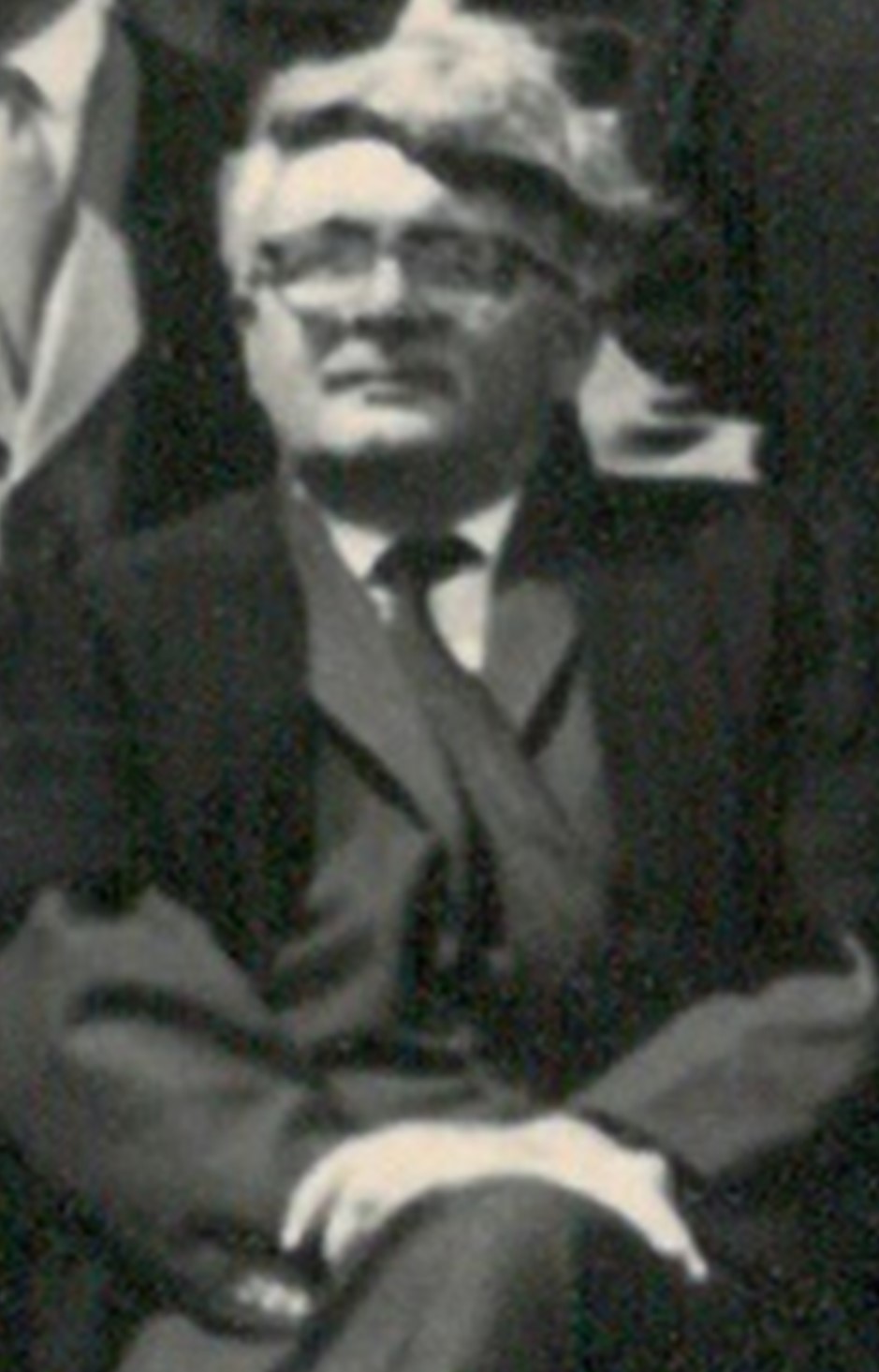
| Prof. Reginald Francis Treharne (1901-1967), Joint Vice-President of the Aberystwyth British-Soviet Friendship Committee & Chair of History at the University College of Wales, Aberystwyth (1930-1967), photo taken c. 1967, used with the permission of Aberystwyth University Archives |
The only talks which were given in Welsh were provided by Mary and Thomas Nicholas respectively, on topics such as Rwsia Heddiw and Rwsia a Chymru, which discussed both Russian society at that time and the relationship between Russia and Wales rather than Britain as a whole. Mr. Nicholas’ wartime experience in Aberystwyth, where he had called home since 1921, demonstrates perfectly the 360-degree change in the position which was taken on the Soviet Union. As he was arrested and imprisoned in Swansea and Brixton for a total of four months in 1940 for his steadfast support for the Soviet Union and more officially on charges of fascism alongside his son, Thomas Islwyn ap Nicholas, who was also a member of the elected committee for the organisation in 1944. His views, opinions, and knowledge of Russia, of which he had given talks on before the war, were however then welcomed after the Soviet Union had been invaded, the official British position had changed, and the Aberystwyth branch of the British-Soviet Friendship Committee was being established. As he was given alongside the great and good of Aberystwyth society, the joint position of Joint Vice-President on the Executive Committee and as has already been discussed he gave talks for the members of the Friendship Committee too. According to Colin Turbett, this willingness and involvement of communists with friendship committees was not uncommon as they could gain prestige by demonstrably being avid backers of the Soviets and by extension then the Allied powers.
 |
| Thomas Evan Nicholas (1879-1971), Joint Vice-President of the Aberystwyth British-Soviet Friendship Committee (left) and D. J. Williams conversing at a CND rally at Aberystwyth, taken by Geoff Charles on the 25th of May 1961, held at the National Library of Wales |
Many of these events not only aimed to improve the knowledge within Aberystwyth of the everyday life and culture of the Soviet Union, but also to raise funds to provide aid to the people of the U.S.S.R, by collecting after and during these events as well as running whist drives and bring and buy sales that were held in various locations such as Jackson’s Café in Aberystwyth, the Old College, and other locations in Llanbadarn Fawr and Penparcau. The Aberystwyth British-Soviet Friendship Committee, much like their Swansea counterparts also raised money for other pro-Soviet organisations which emerged at a similar time, such as the Joint Committee for Soviet Aid’s Stalingrad hospital project that was set up after the long battle of Stalingrad had ended in early 1943. Money which was raised on behalf of this project went towards buying beds for the hospital, such as the £1850 that was raised in November 1943 by the Swansea Friendship Committee which ended up providing 14 beds. In the case of the Aberystwyth Friendship Committee, which appears to have been a much smaller organisation than their Swansea counterparts mostly due to it being established later, still impressively raised alongside their normal fundraising efforts over their target of £150 for the project in June 1943, with them raising a final total of £201 13s 8d. This total was able to provide one bed for the City Clinical Hospital in Stalingrad, which no doubt went on to provide much aid and comfort to the wounded there. In recognition of these fundraising achievements, after only being established as a friendship committee for two months when they raised these funds, the Aberystwyth Friendship Committee was given a certificate, of which can be seen below, as a token of the appreciation of their efforts and generosity in a time of hardship and war, where belts, budgets and spending was tightened in Aberystwyth and across Britain.
 |
Certificate commemorating the donation of a hospital bed from Aberystwyth British-Soviet Friendship Committee to the People of the Soviet Union as a token of admiration and gratitude from the people of Aberystwyth to the heroic defenders of Stalingrad, photo taken with permission of the Archifdy Ceredigion Archives
|
This financial assistance to other organisations which were concerned with raising funds to aid the people of the Soviet Union was however not limited to the Joint Committee for Soviet Aid, with the branch also raising money for organisations such as the local Red Cross’ appeal for Mrs Churchill’s Aid to Russia, which was set up in 1941 with Mrs Clementine Churchill as its Chairman. This was primarily done with a collection held between the 9th and 14th of August 1943, during the ‘Defence of Moscow’ exhibition that was held in the Town Hall by the Friendship Ccommittee. Further money, £20 exactly, was also raised for the Society for Cultural Relations with the U.S.S. R, which was older than any of the other organisations which have been mentioned, having been established in 1924 and which continues to this day to try and foster diplomatic relations with the UK and the Soviet Union, now with its focus solely being on relations with Russia. This money for the Society for Cultural Relations with the U.S.S.R was raised after a recital, organised by Mrs Finberg, of Red Army and Russian folk songs by a Miss Olana in the Town Hall on the 3rd of September 1943.
Financial assistance it is important to note was not the only kind of assistance that the Aberystwyth Friendship Committee offered the people of the Soviet Union in their time of need during WW2. Many of the Committee also set about on a knitting mission, taking up their knitting needles to create 150 hand-knitted garments for the men, women, and children of the Soviet Union between 1944 and 1945. These garments no doubt brought warmth and comfort during a period of great hardship that these people were experiencing.
The Aberystwyth British-Soviet Friendship Committee was ultimately influenced by the brief wartime change in the official British position on the Soviet Union as well as at its most basic the urge to answer that call within us all to act when we see the suffering and pain of our fellow man. This call brought together an eclectic mix of people from within Aberystwyth society, who no doubt probably had not all worked together closely before, with this common aim to provide aid to the people of the Soviet Union through raising money by any means possible. Pooling local and national expertise, from all political persuasions or none, on the topics of Soviet culture, history, society, and geography provided the Aberystwyth public with regular talks, addresses, exhibitions, recitals, and concerts. This ensured the fulfillment of the second aim of the friendship committees, to educate and improve the knowledge of this briefly lived new ally, the Soviet Union, within the British public. They may have not been exactly in bed with the Soviets, but they certainly did provide the warmth and comforts of a bed to lay in, warm clothes to put on their backs and the feeling and knowledge of having some money in their pockets.
Blog by Conor Brockbank
SOURCES
Clairmont, F. F. ‘Stalingrad: Hitler’s Nemesis,’ Economic
and Political Weekly, 38 (2003): 2819-2823.
Davies, T. M., (2001). EVANS, Sir DAVID OWEN (1876 -
1945), barrister, industrialist, and politician. Dictionary of Welsh
Biography. Retrieved 11 Mar 2022, from https://biography.wales/article/s2-EVAN-OWE-1876
Ellis, E. L., (2001). EVANS, IFOR (IVOR) LESLIE (1897
- 1952), principal of the University College of Wales, Aberystwyth. Dictionary
of Welsh Biography. Retrieved 11 Mar 2022, from https://biography.wales/article/s2-EVAN-LES-1897
Jenkins, B. R., (2017). WILLIAMS, MARY (1883-1977),
French scholar. Dictionary of Welsh Biography. Retrieved 11 Mar
2022, from https://biography.wales/article/s11-STEP-MAR-1883
Jones, E. D., (2001). TREHARNE, REGINALD FRANCIS (1901
- 1967), Professor of history. Dictionary of Welsh Biography.
Retrieved 11 Mar 2022, from https://biography.wales/article/s2-TREH-FRA-1901
Jones, J. G., (2001). ROBERTS, Sir GEORGE FOSSETT
(1870 - 1954), soldier, politician, and administrator. Dictionary of
Welsh Biography. Retrieved 11 Mar 2022, from https://biography.wales/article/s2-ROBE-FOS-1870
Jones, R. M., (2001). JONES, IDWAL (1899 - 1966),
educationist and university professor. Dictionary of Welsh Biography.
Retrieved 11 Mar 2022, from https://biography.wales/article/s2-JONE-IDW-1899
King, B. Changing Man. The Education System of the
USSR. London, 1936.
King, B. Children in the Soviet Union. London,
1941.
King, B. Introducing the USSR. London, 1946.
Mary Williams Papers: Papers relating to
the Aberystwyth British-Soviet Friendship Committee, 1944-1945, National
Library of Wales.
Medijainen, E. Weaving the Iron Curtain, the
Allies, and the Baltic States, 1939-1944. Lanham, 2020.
MUS/142/1 Joint Committee for Soviet Aid: gift of
hospital bed. Certificate commemorating the donation of a hospital bed
from Aberystwyth British-Soviet Friendship Committee to
the People of the Soviet Union as a token of admiration and gratitude
from the people of Aberystwyth to the heroic defenders of Stalingrad,
Archifdy Ceredigion Archives.
Overy, R. Blood and Ruins. The Great Imperial War,
1931-1945. London, 2021.
Rees, D. B., (2011). NICHOLAS, THOMAS EVAN ('Niclas y
Glais'), (1879-1971), poet, minister of religion and advocate for the Communist
Party. Dictionary of Welsh Biography. Retrieved 11 Mar 2022, from https://biography.wales/article/s8-NICH-EVA-1879
Reiman, K. About Russia, Its Revolutions, Its Development
and Its Present. Bern, 2016.
Sanderson, S.F. ‘Obituary: Professor Mary Williams,’ Folklore,
89 (1978): 104-105.
Sato, K. ‘Acknowledgment of the Secret Protocol of the
German-Soviet Non-aggression Pact and the Declaration of State Sovereignty by the
Union Republics of the USSR,’ Europe-Asia Studies, 66 (2014): 1146-1164.
Turbett, C. The Anglo-Soviet Alliance: Comrades and
Allies during WW2. Barnsley, 2021.
Ward, A. A Guide to War Publications of the First
and Second World War. Barnsley, 2014.
Webber, M. ‘The Emergence of the Foreign Policy of the
Russian Federation,’ Communist and Post-Communist Studies, 26 (1993):
243-263.
https://coflein.gov.uk/en/site/23300/
https://mrc-catalogue.warwick.ac.uk/records/MSH/2/433
https://www.cambridge.org/core/journals/geological-magazine/article/abs/selected-exercises-upon-geological-maps-by-j-i-platt-murby-george-allen-and-unwin-london-1951-32-pages-with-30-exercises-price-6s/C61D7A658D916FC2DD077664D057E8AA
https://www.britannica.com/contributor/Richard-I-Aaron/1
http://www.scrss.org.uk/aboutus.htm#:~:text=The%20SCRSS%20was%20founded%20in,uninterrupted%20until%20the%20present%20day
https://www.nationaltrust.org.uk/chartwell/features/lady-churchills-aid-to-russia-medallion#:~:text=The%20funds%20went%20to%20the,Russia%20to%20produce%20artificial%20limbs
https://grahamstevenson.me.uk/2008/09/19/ashleigh-charles/
http://jot101ok.blogspot.com/2013/01/soviet-millionaires.html
Various
photos were kindly provided by both Aberystwyth University Archives &
Archifdy Ceredigion Archives